
Man Digs Up Sister’s Grave to Prove Death in Bank Dispute in Odisha

A shocking incident in eastern India has sparked widespread debate about banking procedures, public awareness, and institutional sensitivity after a man allegedly exhumed his deceased sister’s remains to prove her death during a dispute with bank officials.
The incident occurred in Odisha’s Keonjhar district, where a 50-year-old man, identified as Jeetu Munda, reportedly dug up his late sister’s grave and carried her skeletal remains to a local bank branch. His desperate act came after repeated attempts to access funds from her account were unsuccessful.
According to reports, Munda had been trying to withdraw ₹20,000 (approximately $240) from the bank account of his elder sister, Kalra Munda, who passed away earlier this year on January 26, 2026. Despite informing bank officials multiple times about her death, he claimed he was repeatedly told to bring the account holder in person to authorize the withdrawal.
Frustrated and unaware of the proper legal procedures required to access a deceased person’s bank account, Munda resorted to extreme measures. He reportedly exhumed his sister’s body and brought her skeletal remains to the bank as proof of her death.
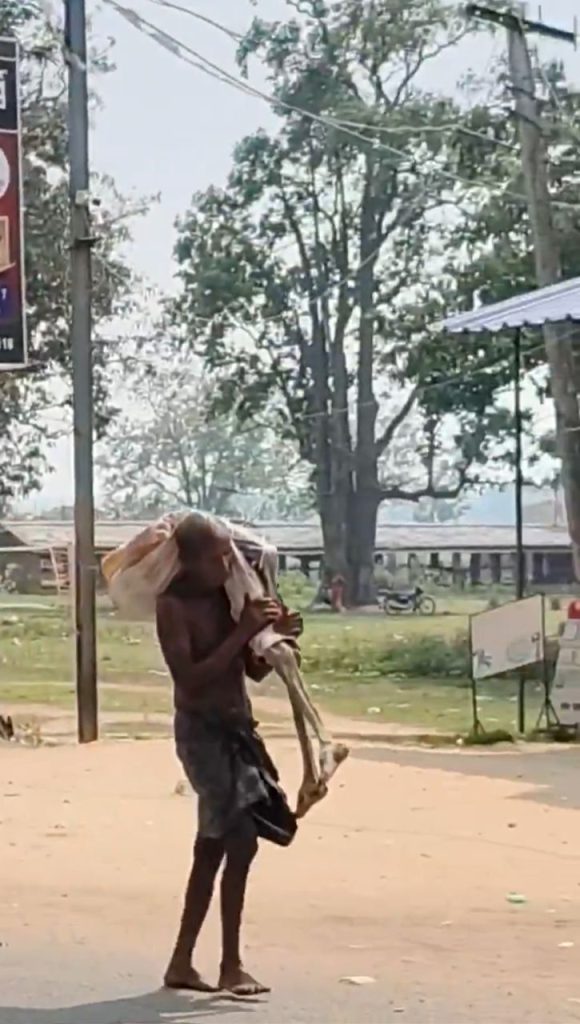
Witnesses described the scene as both shocking and distressing, with bystanders gathering as the man confronted bank officials in what he believed was his only option to be taken seriously.
Local police were called to the scene shortly after the incident escalated. Authorities intervened and spoke with both Munda and the bank staff to de-escalate the situation.
A police official stated that Munda, who belongs to a tribal community, was unaware of the legal requirements for accessing funds from a deceased person’s account. The officer also noted that the bank officials had failed to adequately explain the necessary procedures, which typically include providing a death certificate, proof of relationship, and possibly a legal heir certificate or nominee documentation.
Following the intervention, police assured Munda that they would assist him in completing the required process to access the funds legally. The skeletal remains were later reburied respectfully in the presence of law enforcement officials.
The incident has since drawn criticism from the public and observers who argue that the situation reflects a broader issue of institutional insensitivity and lack of communication, particularly when dealing with vulnerable or less-educated individuals.
Experts note that while banks must adhere to strict procedures for financial security, there is also a responsibility to guide customers, especially those unfamiliar with legal processes, through the necessary steps humanely and understandably.
“This case is not just about ignorance of the law,” one social commentator remarked. “It highlights a failure in communication and empathy from institutions that serve the public.”
The case also sheds light on the challenges faced by individuals in rural and tribal communities when navigating formal systems such as banking and legal documentation. Limited access to information, language barriers, and lack of education can often lead to confusion and, in extreme cases, actions like this.
As the story continues to circulate widely online, it has sparked conversations about the need for better public education on legal and financial processes, as well as more compassionate service delivery from institutions.
While the situation has now been resolved with police assistance, the incident remains a stark reminder of the gap between institutional procedures and public understanding. It underscores the urgent need for improved communication, awareness campaigns, and sensitivity in dealing with citizens, particularly those from marginalized backgrounds.
Authorities have not indicated whether any formal action will be taken against the bank staff, but the case has already left a lasting impression on many, raising important questions about accountability and humanity within public systems.