Tragedy on Christmas Eve: The Great Nigeria Insurance Building Fire in Balogun Market, Lagos Island
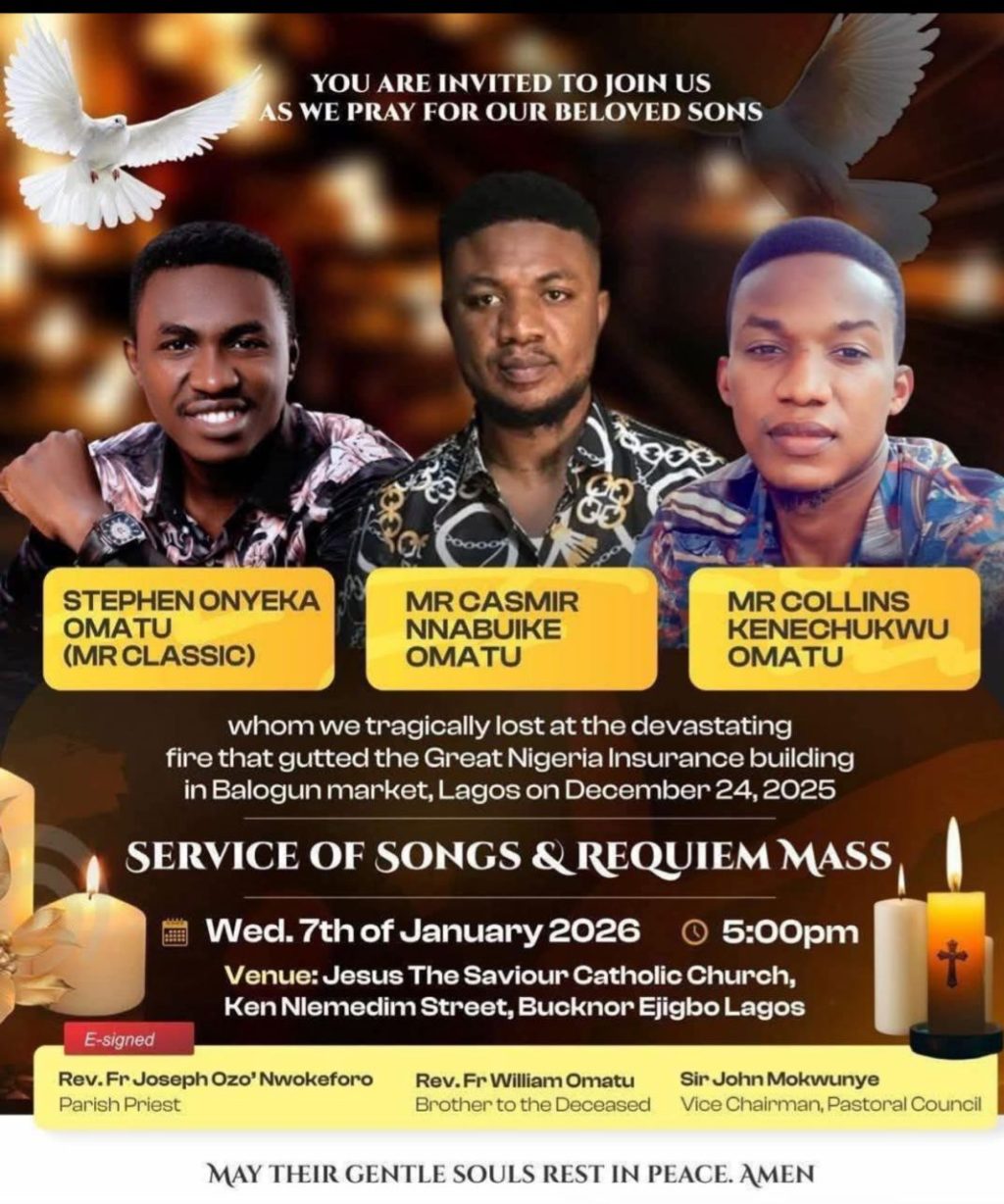
On the evening of December 24, 2025, a devastating fire broke out at the Great Nigeria Insurance (GNI) House, a high-rise commercial building located on Martins Street, within the bustling Balogun Market area of Lagos Island. What began as a routine Wednesday afternoon quickly turned into one of the most shocking urban disasters Lagos has seen in recent years – a blaze that both consumed a towering building and claimed precious lives, leaving families, traders, and Lagosians in deep mourning.
A Fire That Spread Too Fast
According to authorities, the fire was first reported at about 4:41 pm on Christmas Eve – a time when many businesses were still open and ordinary Lagosians were wrapping up their day’s activities. Within minutes, residents and emergency services watched in disbelief as thick smoke and fierce flames engulfed multiple floors of the 22-storey building.
Lagos State Fire & Rescue Service, alongside the Lagos State Emergency Management Agency (LASEMA) and other first responders, mobilised quickly. Firefighters arrived at the scene within 12 minutes but faced an uphill battle against the intensity of the blaze, which reportedly originated on the fourth floor before rapidly spreading upward and downward through the structure. 
The tragedy claimed multiple lives, with authorities later confirming that at least eight people died as a result of the fire. Several others were rescued alive, some sustaining serious injuries.
Among the victims were three brothers, well-known traders within Balogun Market, whose deaths deeply affected the community. Due to the severity of the fire, some victims required DNA identification, underscoring the scale of the disaster.
This loss extends far beyond numbers – families were shattered, futures cut short, and an entire community left grieving during what should have been a season of joy.
The Building and Its Complex History
While the inferno drew widespread attention, there was also controversy surrounding the building itself. Great Nigeria Insurance Plc issued a statement clarifying that it did not occupy or control the property at the time of the fire, explaining that legal disputes had kept the company from physical possession of the site for several years. Although the structure bore the company’s name, GNI said it had no offices there and that its main operations continued from its head office in Ikoyi. 
The building had long served as a warehouse and retail centre, used by traders – particularly those dealing in clothing materials – as well as hosting some corporate offices and shops. Its prime location within the Balogun Market area made it a hub of commercial activity, but also placed it within one of Lagos’s most congested and high-risk urban environments.
The fire brought attention to the crucial role of emergency services in Lagos, from LASEMA to the Fire & Rescue Service and supporting agencies. Their coordinated response helped contain the inferno and prevented even greater loss of life. At the same time, the disaster exposed gaps in infrastructure readiness, access for emergency crews in tightly clustered urban spaces, and fire safety compliance among older commercial buildings. 
In response, calls have risen from civic leaders, safety advocates, and political figures urging improved emergency response frameworks, better building inspections, and enhanced fire prevention measures – especially in dense market environments where risks are high and escape routes are limited. (Note: Peter Obi commended response efforts and urged continued focus on safety improvements.)
The Balogun Market area is one of Lagos Island’s most vibrant commercial districts, home to thousands of traders and businesses that contribute significantly to the city’s informal economy. The fire not only destroyed a towering structure, but also obliterated stock, livelihoods, and financial security for many small-scale traders whose goods were stored or sold in the building. Market activities along Martins Street were disrupted as neighbouring streets were cordoned off for safety and rescue operations. 
For families of the victims, the economic impact is deeply personal – loss of income, shattered futures, and the emotional toll of grieving loved ones whose lives were entwined with daily market commerce.
The GNI House fire is a stark reminder that urban safety cannot be taken for granted. It raises critical questions about:
• Building safety standards and enforcement
• Emergency preparedness in dense commercial districts
• Trader and civilian education on fire prevention
• Infrastructure investments to support rapid response
As demolition begins and plans for recovery take shape, Lagosians are left reflecting on the human cost of disasters and the imperative of safety reforms that protect lives as well as livelihoods.
The tragic fire at the Great Nigeria Insurance House on December 24, 2025 is a story of loss, resilience, and urgent lessons for Nigeria’s largest city. Behind staggering headlines are real people – families mourning sons, parents grieving children, and communities trying to rebuild. Through coordinated government action, emergency responses, and a collective call for better safety standards, there remains hope that painful lessons will lead to meaningful change.